What is PHP in 2026? Whether you’re launching a new website, building a business platform, or exploring modern web development, you’ll inevitably encounter the PHP programming language. In technical terms, a PHP website is one that leverages server-side scripting through what’s known as "Hypertext Pre-processor". This coding model enables dynamic content generation, rapid page loading, and seamless integration with HTML—making it a cornerstone of modern web infrastructure.
In plain language, PHP is a powerful scripting language that works alongside HTML to create interactive, data-driven websites. While HTML alone produces static content, adding PHP language unlocks advanced functionality: user authentication, real-time form processing, database interactions, and dynamic content rendering. Sophisticated developers incorporate PHP frameworks like Laravel or Symfony to achieve greater flexibility, scalability, and maintainability—especially during the early stages when website architecture is being defined.
Why PHP Still Dominates Web Development in 2026
Simple PHP operates entirely on the server. Unlike legacy dial-up-era sites where every line of code had to load on the client device, PHP "rests" its logic on the server hosting your site. When a user enters your URL, their browser receives pre-rendered HTML—meaning their device doesn’t need to "build" the code. This significantly reduces load time and improves user experience, a critical factor in today’s performance-driven web.
This server-side advantage is why PHP remains the default language for web hosting and content management systems. Today, 72.2% of all websites use PHP for server-side programming—including major platforms like Facebook, Wikipedia, and WordPress [1]. Despite frontend hype and the rise of JavaScript, PHP quietly powers the internet and never stopped evolving.
Top Real-World Examples of PHP in Action
Reduced load time is just one of many benefits. Here are key advantages of using PHP websites in 2026:
- Performing complex calculations. From calculating dates and times to executing monetary conversions or measurement transformations, PHP handles both simple and complex mathematical functions efficiently.
- Collecting and managing user information. Whether adding a forum, building a contact form, or integrating an address book, PHP language enables secure data capture and storage.
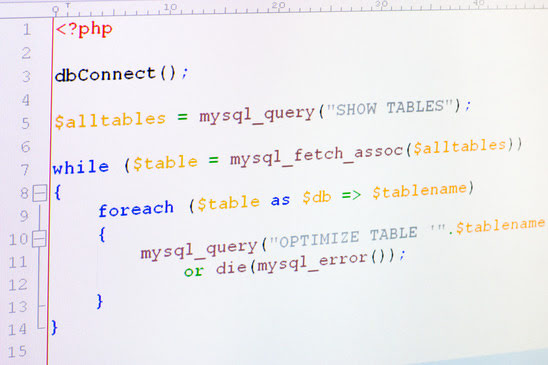
- MySQL database interaction. PHP seamlessly connects with MySQL databases to display online inventories, publish product catalogs, enable content search, and manage user log-in panels for registered accounts.
- Graphic creation and editing. PHP simplifies image manipulation: resizing, color adjustments, rotation, and even on-the-fly graphics generation—ideal for dynamic content sites.
Other compelling benefits include publishing large image galleries, ensuring form validation for users, and creating interactive surveys—all powered by PHP language.
So, there it is: the definitive answer to what is PHP in 2026. If you want a fully functional, aesthetically stunning website that leverages the full power of server-side scripting—while avoiding the limitations of plain HTML—then contact us for a free consultation. We’ll design a custom site that integrates PHP and delivers the performance, flexibility, and scalability modern users expect.