In 2026 and 2027, the allure of free remains strong, but free WordPress themes increasingly undermine SEO performance. New site owners face inevitable startup costs—domain registration, hosting, setup, and design—but opting for a free theme often backfires. While the promise of zero cost is tempting, the old rule “there’s no free lunch” holds true: free themes frequently compromise speed, security, and search visibility [1][2].
The Pros of Free WordPress Themes (and Why They’re Short-Lived)
The most obvious advantage of free WordPress themes is clear: they’re free. This eliminates upfront design costs and reduces time-to-configure for basic setups. Many include prebuilt design features enabling quick customization, and some update reliably with WordPress’ latest versions [1]. Additionally, if a theme is widely used, user feedback or rating systems may signal reliability. Potential users can still Google the theme or designer’s name to verify credibility.
However, these pros fade quickly when deeper issues emerge. Most free themes lack originality, appear in thousands of identical sites, and often skip critical SEO optimizations like schema markup, clean code, or mobile responsiveness [2][3].
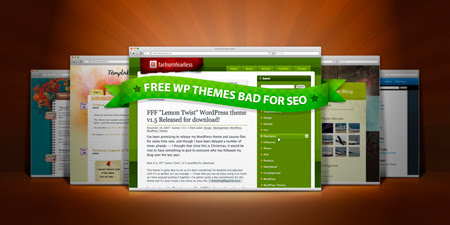
The Cons of Free WordPress Themes That Destroy SEO
While stumbling on a free WordPress theme feels like a win, the reality is often alarming. Most designers don’t release free themes for altruism—they hide ulterior motives. Support is limited or nonexistent, and the biggest SEO risks go far beyond poor documentation.
- Free WordPress themes lack originality. When thousands of sites share the same theme, Google struggles to distinguish content, penalizing duplicate design signals and reducing ranking potential [3].
- Free WordPress themes may embed hidden code. Some designers insert obfuscated “base64 code” that redirects traffic or injects black-hat SEO links, triggering automatic penalties from index robots [2].
- Free WordPress themes can be “locked.” Users may discover nefarious code they cannot remove without breaking their site, especially if the designer intentionally restricts access to critical files [2].
- Free WordPress themes often include irrelevant backlinks. These drive down domain authority and confuse relevance signals, leading to SEO penalties from Google’s ranking algorithms [3].
- Free WordPress themes may cripple functionality. Attractive features often operate in a “pay-to-play” model, locking essential SEO tools behind premium gates after upload [1][2].
In today’s performance-first ecosystem, where Core Web Vitals, mobile-first indexing, and semantic HTML dictate rankings, these flaws are fatal. High-performing 2026 themes like Astra, GeneratePress, and Kadence prioritize lightweight code, schema support, and caching compatibility—but free themes rarely match these standards [2][1].
If you want to avoid SEO headaches and ensure long-term growth, invest in a custom-designed site. For an original, performance-optimized experience tailored to your brand, contact CQuinn Design and we’ll build the perfect site for you.