 Wow, the folks over at wordpress have been incredibly busy lately. I just performed update wordpress services for a client in which I upgraded their plugins to support WordPress 7.0, verified compatibility for legacy plugins, and modernized their Headway theme to align with the latest AI-ready architecture. This was a substantial overhaul for the client, as they hadn’t updated in over a year. You can imagine the integration errors when the upgrade was finally completed, especially since this client relied on complex custom CSS and outdated plugin configurations. The update occurred on a Friday when WordPress 7.0 Release Candidate 3 was available, and by Monday, the final release was scheduled for May 20, 2026. This happened to be the day the client checked their dashboard to confirm the work. Needless to say, I had to explain that the update had been released that day, with the final version rolling out over the weekend.
Anyway, all this talk about WordPress got me wondering…why so many rapid innovations? So I headed over to the wordpress site to catch up on my reading. It turns out WordPress 7.0 is already out—at least in its final release phase. You must be a beta tester to access the full changelog. Originally, developers planned to drop support for older browsers like IE7, but the focus shifted to incompatible legacy systems that no developers use today, such as PHP 4 and IE6. Suffice to say, IE7 support is now fully discontinued in WordPress 7.0.
Here are some of the groundbreaking features in WordPress 7.0. It was officially released on May 20, 2026, for public use.
Take a look at the WordPress 7.0 dashboard—it’s a significant evolution, blending AI experimentation with modernized admin architecture.
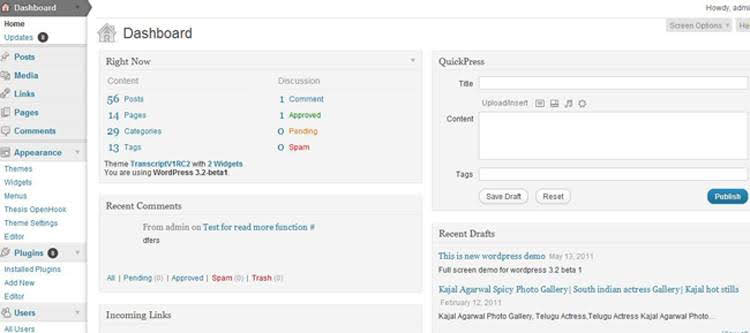
Here’s what’s new:
AI Infrastructure Revolution: WordPress 7.0 introduces the AI Client and Abilities API, enabling plugins to plug into external AI systems. Connectors act as a central hub for integrating generative AI, content summarization, title optimization, and image generation.
Visual Revisions & Responsive Controls: Content changes are easier to review and compare visually. Editing controls are now fully responsive, giving designers precise control over how content appears across all devices.
Data Views Framework: A new system for organizing, filtering, and managing content across the WordPress admin, laying the foundation for consistent editorial workflows.
Gutenberg-Powered Admin Architecture: WordPress is moving its administrative experience onto newer Gutenberg systems, creating a unified editing and content management experience.
Albert Bar Enhancements: Additional links and AI-powered shortcuts have been added to the admin bar, making it even more useful for modern workflows.
Minimum System Requirements: PHP 8.0+ and MySQL 8.0+ are now required. Internet Explorer 6 and 7 are no longer supported.
Favorites Menu Removal: The favorites menu has been permanently removed. Plugins using this menu must transition to admin bar placement.
Known Issues: The blue admin color scheme hasn’t been updated yet—test in the gray zone for best results.