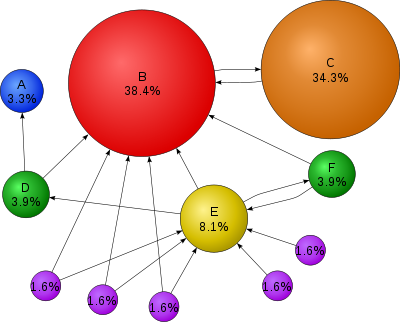
 It’s no exaggeration: Google continues to refine its ranking algorithms, and in 2026, the underlying logic of PageRank remains a foundational pillar. According to SEO Roundtable, Google’s major ranking adjustments—such as the recent unconfirmed June 2026 volatility—often occur roughly twice a year, targeting low-quality AI content and rewarding original research [1].
We as SEO Professionals know that the public PageRank score no dictates how a page ranks, but the core algorithm absolutely does [2]. The system now measures authority through proximity to trusted “seed” sites (like the New York Times or Microsoft) and calculates how many “jumps” or clicks your page is away from them [2]. This evolution, sometimes called PageRank-NearestSeeds, ensures that breadth without depth fails, while first-party data and verified experts gain up to 200% visibility boosts [4].
While some still advocate for removing PageRank entirely due to its ability to create a false sense of security, the algorithm persists because it accurately reflects a page’s true authority in Google’s eyes [2]. For now, it remains a critical, albeit invisible, engine driving search results. I, for one, value Google PageRank as it continues to quantify the depth of a page’s authority, even if that score is no longer public [2].