Placing Keywords Strategically
As promised here is part 2 of 3 for Back to the Basics of SEO
Placing Keywords Strategically: One you have determined the best keywords to use, you need to place them strategically on your website, mainly in two places.
In the code: It is the search engines, like Google-Bing-Yahoo!-, that will ultimately associate a keyword with a webpage, and guess where the first place these search engines look for keywords? That’s right, the search engine is going to look for the keywords at the top of the page’s coding – within the head-tag that defines the pages overall characteristics. (Don’t forget, the web page’s code is not visible from the browser and you will often have to view the web page’s “Source” in order to see the code) Incorporate the keywords you have chosen in the title, description, and keyword tags. These are often called meta tags, and the code often begins with that word.
The title will appear at the top of the user’s browser window,:
Shown here:
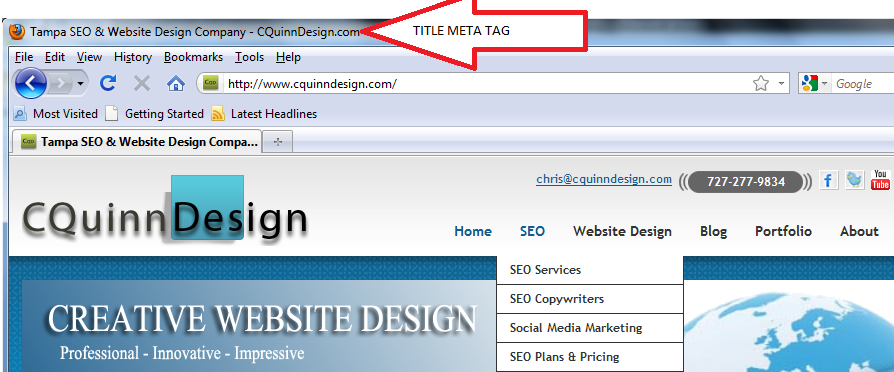
And the description is often quoted by search engines on the Search Engine Results Page (SERP):
Shown here:
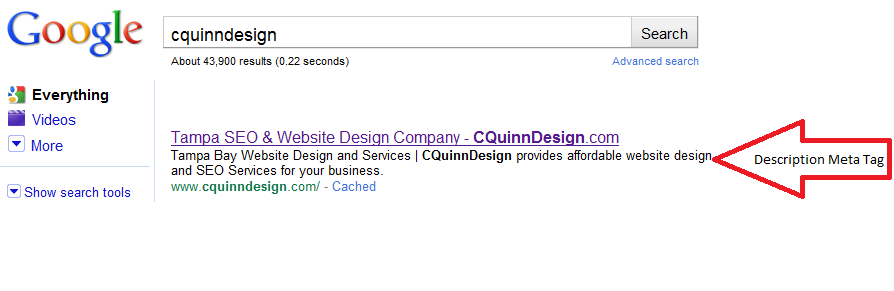 It is recommended that the title for each webpage be six to twelve words, and you want to keep the description twelve to twenty-four words long. The title and description should reinforce each other and the page’s visible CONTENT. If you have a lot of keywords, choose particularly because search engines prize naturally sounding language. You can load all your keywords, even misspelled variations, into the keywords Meta tag field.
In the visible content: Your keywords should appear frequently in the text, as well as in the other elements of a page, including the descriptive “alt” tags that underlie images and in the headlines and subheads atop a section of text. Though there I no agreement among SEO optimizers about how much text a page should include or how frequently keywords should be mentioned, a basic principle to practice by is this: If people find your copy thoughtful and worth reading, a search engine will too. Never stuff a web page full of keywords in a manner that it does not read naturally. Simply making a list of keywords and adding filler text like “a, the, this, that, we, your, is, too” will not improve your rankings!
Plus, remember, when you have quality content, which makes your website visitors want to share your work on Social Networking websites like Facebook, Twitter and more!
Read: Part 1 0f 3